
Android or iOS First? A Sri Lankan Business Decision Guide
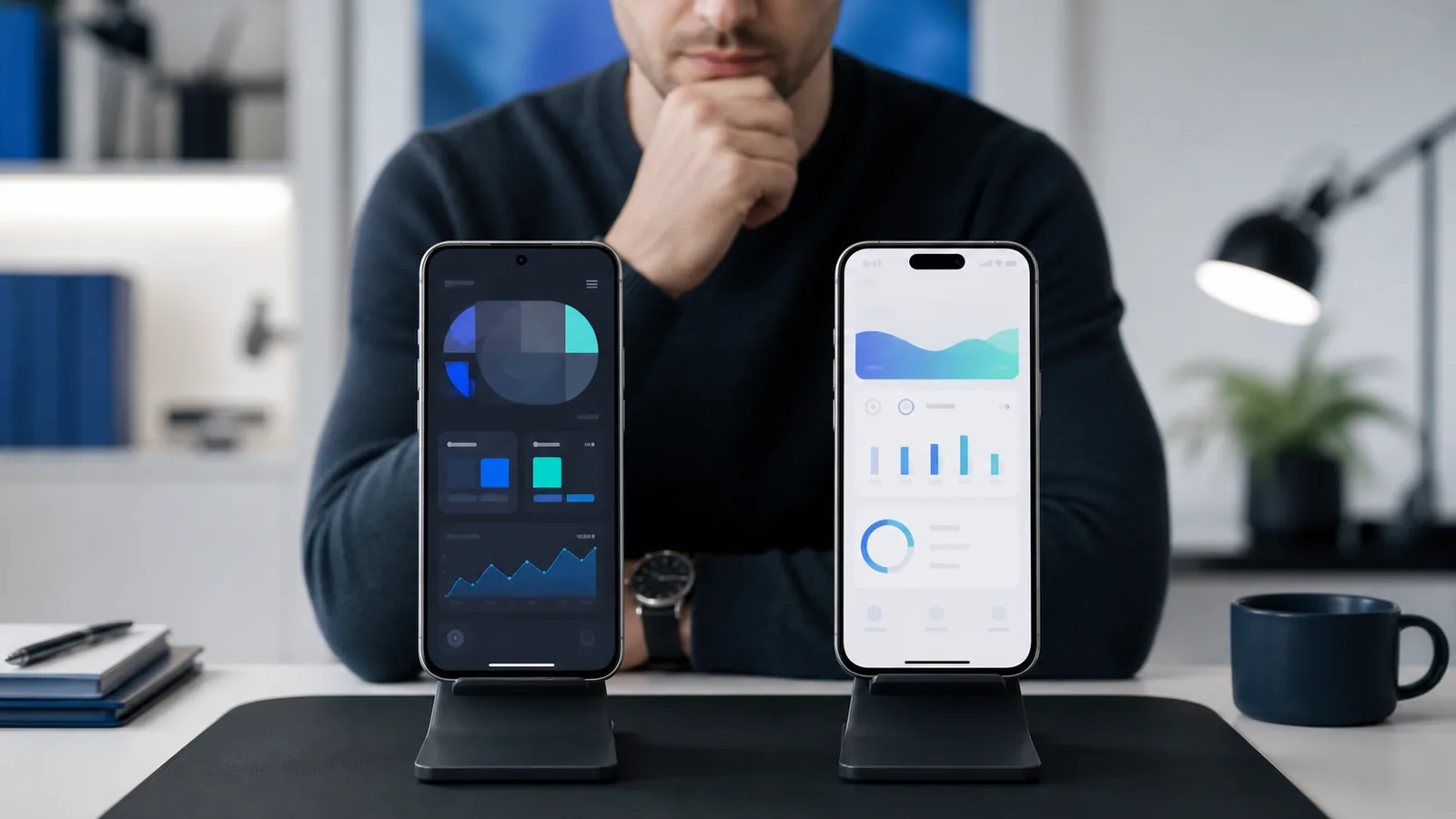
There is no universal winner between Android and iOS. The right first platform is the one that reaches the priority users, supports the essential workflow, and fits the organisation’s ability to test and maintain the product. Market-share headlines can start a discussion, but your customer evidence should make the decision.
If the first release is still undefined, begin with the mobile app MVP planning guide. Platform selection becomes easier once the user, critical workflow, device capabilities, and success measure are explicit.
Start with your actual users
Interview and survey representative customers or staff. Ask which device and operating-system versions they use, but also observe where the task happens. A field worker may use an employer-provided Android device; an overseas premium customer group may be concentrated on iOS; a mixed consumer audience may require both.
Check existing analytics for mobile website visitors, authenticated customers, or internal device-management records. Separate current customers from the broader public. A national average can be irrelevant to a niche service.
Also consider who pays. In a business-to-business product, the purchaser, administrator, and daily user may have different devices and needs. Distribution through managed company devices is a different problem from public app-store acquisition.
Identify platform-dependent requirements
List hardware and operating-system capabilities needed for the critical workflow: camera, Bluetooth, background location, offline storage, biometrics, push notifications, digital wallet, near-field communication, or integration with another installed app. Confirm what is technically possible and what store or privacy policies apply.
Do not choose a technology solely because a framework advertises one shared codebase. A cross-platform approach can share substantial product logic and interface work, but native integrations, testing, store behaviour, and platform-specific user expectations still require attention.
A responsive web application or progressive web experience may be enough when the workflow is primarily forms, content, dashboards, or occasional transactions. A website can reduce distribution friction and provide one reachable URL, although it may not offer every native capability. Our website development service can be compared with the mobile app development route during discovery.
Compare release options
Android first can make sense when validated target users are predominantly on Android, when the product depends on hardware commonly deployed by the business, or when controlled enterprise distribution supports the workflow. Test across a realistic range of screen sizes, performance levels, and operating-system versions.
iOS first can make sense when the target group is strongly concentrated in Apple’s ecosystem, required device capabilities are well defined, or an existing customer base provides reliable iOS testers. Account for Apple’s design, privacy, entitlement, and review requirements from the beginning.
Both platforms together can be appropriate for a public service whose value depends on broad availability. It increases design, testing, release, support, and store-operation responsibilities even when much of the code is shared.
Web first can be the fastest responsible way to test demand when installation, deep device access, background operation, and store discovery are not central. It is not a lesser option; it is a different distribution and capability choice.
Model cost beyond initial development
Estimate product design, development, test devices, quality assurance, store accounts, analytics, customer support, accessibility, security, monitoring, and ongoing releases. Add the cost of platform-specific defects and operating-system changes.
Launching one platform first can focus learning, but only if excluded customers are acceptable for the experiment. Define the evidence required before adding the second platform. This might be activation, repeat use, revenue, workflow completion, or a waiting list of suitable users—not an arbitrary date.
Review the app project cost planning guide for the assumptions a quotation should expose, and keep a maintenance reserve using the mobile app maintenance checklist.
Prepare for store review and quality
Store requirements are living documents. Before submitting, review the current Apple App Review Guidelines and Android core app quality guidance. Test crashes, account access, metadata, privacy declarations, backend availability, and failure states. Provide reviewers with the access and explanation needed to evaluate restricted features.
The app-store launch checklist brings the release material and operational checks into one workflow.
Make a documented decision
Score each option against user reach, workflow fit, integration risk, delivery time, validation value, cost, team capability, and maintenance. Write the evidence and assumptions beside the score. That record prevents a personal device preference from becoming product strategy and gives the team a basis for revisiting the decision.
If two options remain close, prototype the riskiest workflow and test it with users on their normal devices. A small technical investigation is cheaper than discovering a platform limitation after the full build. When the evidence is ready, share it through Get Started for a scoped recommendation.
Related articles



About the author
Joel Jerushan writes about mobile apps, websites, AI, SEO, and practical technology choices for growing businesses.
Learn more about App Dev Sri Lanka