
Local SEO Guide for Sri Lankan Businesses
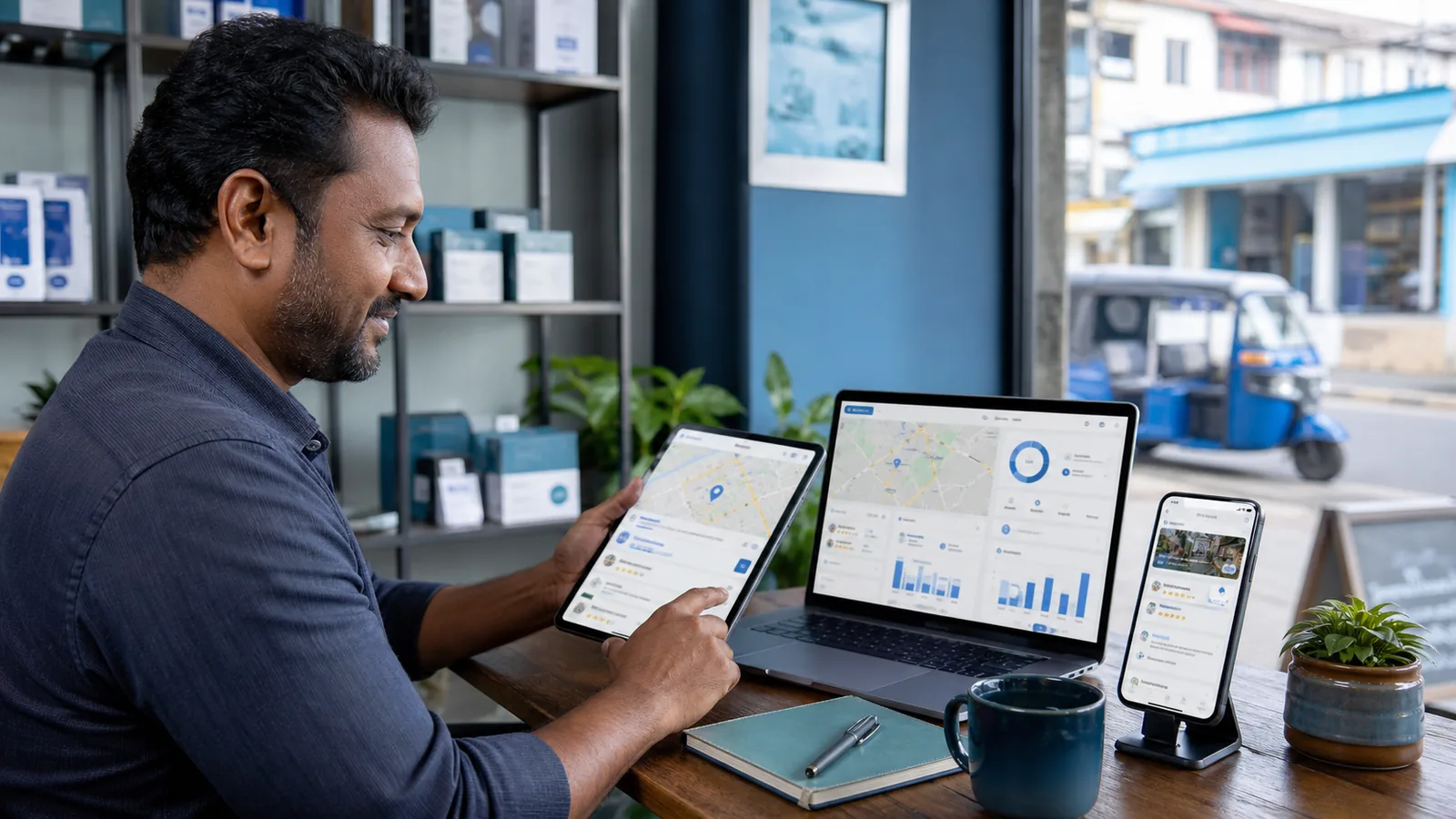
Local SEO helps a business appear when people search for a nearby service, product, office, or destination. It works best when the business has a genuine location or serves a defined area and can provide accurate information, useful pages, and credible customer evidence.
Google says local results are mainly influenced by relevance, distance, and prominence; there is no way to request or pay Google for a better local ranking. Its current local ranking guidance is a better foundation than shortcuts that promise an instant map position.
Complete the business identity
Use the real-world business name consistently. Confirm the primary phone number, website, address or service area, opening hours, categories, and customer-facing description. Make sure the details on the website match important profiles and directories.
Do not create fake locations, virtual offices presented as staffed branches, or keyword-stuffed business names. Each genuine branch should have a responsible team, accurate hours, and a page that helps a visitor use that location.
Keep ownership of the domain, Google Business Profile, analytics, and directory accounts in company-controlled access. Give suppliers only the permissions they need.
Build a useful Google Business Profile
Select the closest primary category and relevant additional categories. Add products or services where the feature is available and appropriate. Publish real photographs of the place, team, work, or products, and update exceptional hours for holidays or temporary changes.
Use the website link that best represents the business or location. Add campaign tracking parameters if your analytics process supports them. Check that calls and messages reach someone during the stated hours.
Review profile edits and customer questions regularly. Anyone can suggest changes, so outdated information can appear without an operating routine.
Create location content for people
The website should explain where the business operates, how to reach or contact it, what is available there, and any area-specific constraints. Add an embedded map only when it helps, and include the essential information as accessible text rather than relying on the map interface.
A branch page should contain unique details: services, staff or responsibility, opening hours, parking or landmark guidance, accessibility, photographs, and local contact information. Do not generate dozens of near-identical suburb pages when there is no distinct presence or information.
Connect location pages to the relevant service. A technology company might link local visitors to website development services, mobile app development, and a portfolio of completed work. The text should describe what the visitor will find after following the link.
Earn and manage genuine reviews
Ask customers for an honest review after a completed transaction or meaningful service moment. Make the request simple but do not offer incentives that compromise authenticity. Never buy reviews, create staff accounts to review the company, or gate the request so only happy customers receive it.
Respond professionally to positive and negative feedback without revealing personal information. A useful response acknowledges the issue, explains the next support step, and avoids a public argument. Track recurring complaints as operational data; better service is a local-search strategy because it creates stronger real-world reputation.
Improve citations and local links
Correct inaccurate listings on relevant chambers, professional organisations, industry directories, suppliers, partners, and local publications. Quality and relevance matter more than submitting the business to hundreds of generic directories.
Earn links through legitimate local activity: publish a useful study, support an event, contribute expertise, collaborate with an organisation, or create a resource that local customers need. Sponsorships and paid placements should be disclosed and qualified appropriately.
Run the SEO content audit checklist to find internal pages that should link to the location or service, and remove outdated address references.
Keep the site technically sound
Local relevance cannot compensate for a site that is blocked, unsafe, or unusable. Check mobile navigation, HTTPS, canonical URLs, status codes, indexability, titles, headings, structured data, and an XML sitemap. Use organisation or local-business structured data only when the facts are visible and accurate; markup does not guarantee a special result.
Fast, stable pages make it easier for customers to call, book, or request directions. Use the Core Web Vitals guide and the small-business launch checklist for the surrounding experience.
Measure leads, not only positions
Track profile calls, website visits, direction requests, bookings, qualified forms, and revenue where attribution is appropriate. In Search Console, review queries and pages by country and device. In analytics, separate organic local landing pages and preserve campaign data through the conversion.
Rank tracking can provide context, but results vary by searcher location and other factors. Report a range of locations and focus on business outcomes. Compare correct periods for seasonality and record major profile, website, and operational changes.
Local SEO is a continuing accuracy and reputation practice. Assign weekly profile checks, monthly review responses, quarterly page reviews, and an annual citation audit. If you need a coordinated technical and content programme, review our SEO services in Sri Lanka or send the locations and goals through Get Started.
Related articles



About the author
Joel Jerushan writes about mobile apps, websites, AI, SEO, and practical technology choices for growing businesses.
Learn more about App Dev Sri Lanka