
AI Product Photography in Sri Lanka: A Review Checklist
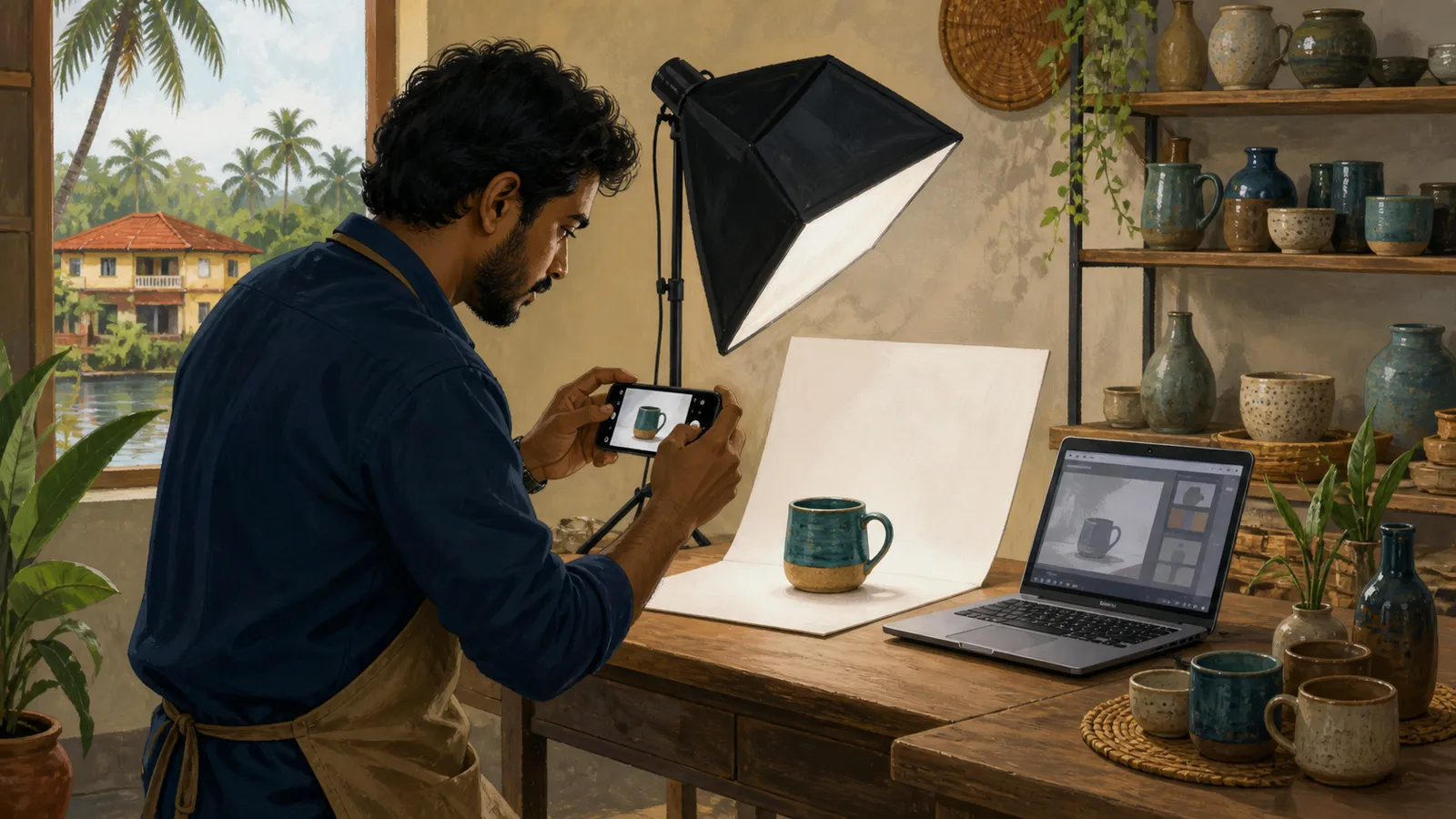
AI product photography can help Sri Lankan online sellers explore backgrounds and campaign concepts, but a product image still needs to represent what the customer will receive. A convincing image that changes the shape, colour or included accessories can create the wrong expectation.
Start with real, approved product references and a clear distinction between factual product views and illustrative campaign scenes.
Decide which images need exact fidelity
A main catalogue image usually needs to show the actual item clearly. A campaign concept may allow more creative surroundings, provided the product remains accurate and the presentation is not misleading.
For a handmade mug, the handle, rim, glaze and scale are important. For clothing, the cut, fabric and colour matter. Write those details down before generating or editing anything.
Google's Gemini image-editing announcement describes the ability to modify uploaded and generated images. That capability does not establish that every output will preserve product details correctly.
Create a reference checklist
| Product detail | Review question |
|---|---|
| Shape | Does the silhouette match the actual item? |
| Colour | Is the appearance reasonably faithful? |
| Label | Are words and symbols accurate? |
| Scale | Does the scene imply the correct size? |
| Accessories | Is anything shown that is not included? |
| Material | Does the texture match the real product? |
Use consistent source photography where possible. An unclear reference makes accurate review harder.
Keep client or supplier permissions with the project records. Do not assume a product photo found online is available for your campaign.
Build one controlled scene
Imagine a fictional Sri Lankan ceramic seller planning a cover image. The brief might place an approved mug on a neutral tabletop with soft morning light and no extra products.
Generate a small number of concepts, then compare each against the same checklist. Reject versions that invent a different handle or make the mug appear much larger.
If a styled scene includes props, make sure customers can distinguish the product from the setting. Clear accompanying text can explain what is included.
Check the page as a whole
An accurate image can still become misleading when paired with the wrong description or variant selector. Review the image, product name, size, colour option and included items together.
For product structured data, Google's product documentation explains the information search systems can use. Structured data should reflect the real page and offer; it is not a way to compensate for inaccurate imagery.
Do not insert invented ratings, prices or availability into markup.
Keep a publication record
Store the original photograph, final asset, prompt and approval notes. This helps when a supplier changes packaging or a customer asks which version was advertised.
Use a compressed web image for the page and a correctly sized social preview. Write alt text that describes the product view without making claims the image cannot establish.
Review images again when the real product changes. An old attractive image is still outdated if the current item looks different.
Can you replace every product photo with AI imagery?
Only if the resulting images accurately represent the products and meet your publication requirements. Many sellers will still benefit from clear real photographs for key views.
Are AI backgrounds always harmless?
Check shadows, reflections, scale and implied accessories. A background can change how the product is understood.
Should you disclose a generated concept?
Use clear labelling when the scene could otherwise be mistaken for a factual product or event photograph.
What is the final approval test?
Ask whether a customer could reasonably expect to receive what the image and description together show.
Related guides
- Google Flow in Sri Lanka: Plan an AI Video Storyboard
- Google Whisk to Flow: A Visual Concept Workflow
- Google Stitch in Sri Lanka: Prototype a Useful App
Browse the Sri Lanka work and technology guides for more practical application, AI and workplace projects.
Related articles
About the author
App Dev Sri Lanka prepared this guide with AI assistance, original examples and the linked primary sources. The collection was informed by Google Trends research for Sri Lanka on 2 September 2026. Illustrations depict fictional people. Examples are educational; this article is not a live vacancy notice or an employer endorsement.
Learn more about App Dev Sri Lanka