
Unveiling the Power of React Native in Mobile App Development: A Comprehensive Guide

Table of Contents
- Introduction
- What is React Native?
- Key Benefits of React Native
- How Does React Native Compare with Other Frameworks?
- Are There Any Drawbacks to Using React Native?
- The Bottom Line

Introduction
React Native is one option for delivering an iOS and Android app with shared React and JavaScript or TypeScript code. It is not automatically the cheapest or best-performing choice. Evaluate the product’s device integrations, interaction requirements and maintenance plan before deciding how much code can realistically be shared.
What is React Native?
React Native is a widely embraced framework for developing cross-platform mobile applications using JavaScript and React. Developers benefit from code reuse for both Android and iOS platforms, resulting in significant time and cost savings. Additionally, React Native supports third-party libraries and native modules, providing access to device features and functionalities.
Key Benefits of React Native
Faster Development and Deployment
- The same codebase can be used for both Android and iOS apps, reducing development and deployment time.
- React Native developers can accelerate the build, test, and app distribution processes.
Native-Like Performance and User Experience
- React Native apps run on the native UI components of each platform, ensuring a seamless and consistent user experience.
- Fast iteration during development helps teams review changes, but it is not a measure of production performance. Test a release build on representative devices before making speed claims.
Scalability and Maintainability
- Modular and component-based structure facilitates easy scalability and maintenance.
- Adherence to best web development practices, including the use of TypeScript, Redux, and GraphQL, ensures code quality and readability.
- Businesses can leverage React Native app development services to bring in expertise, minimize costs, and capitalize on these benefits effectively.
How Does React Native Compare with Other Frameworks?
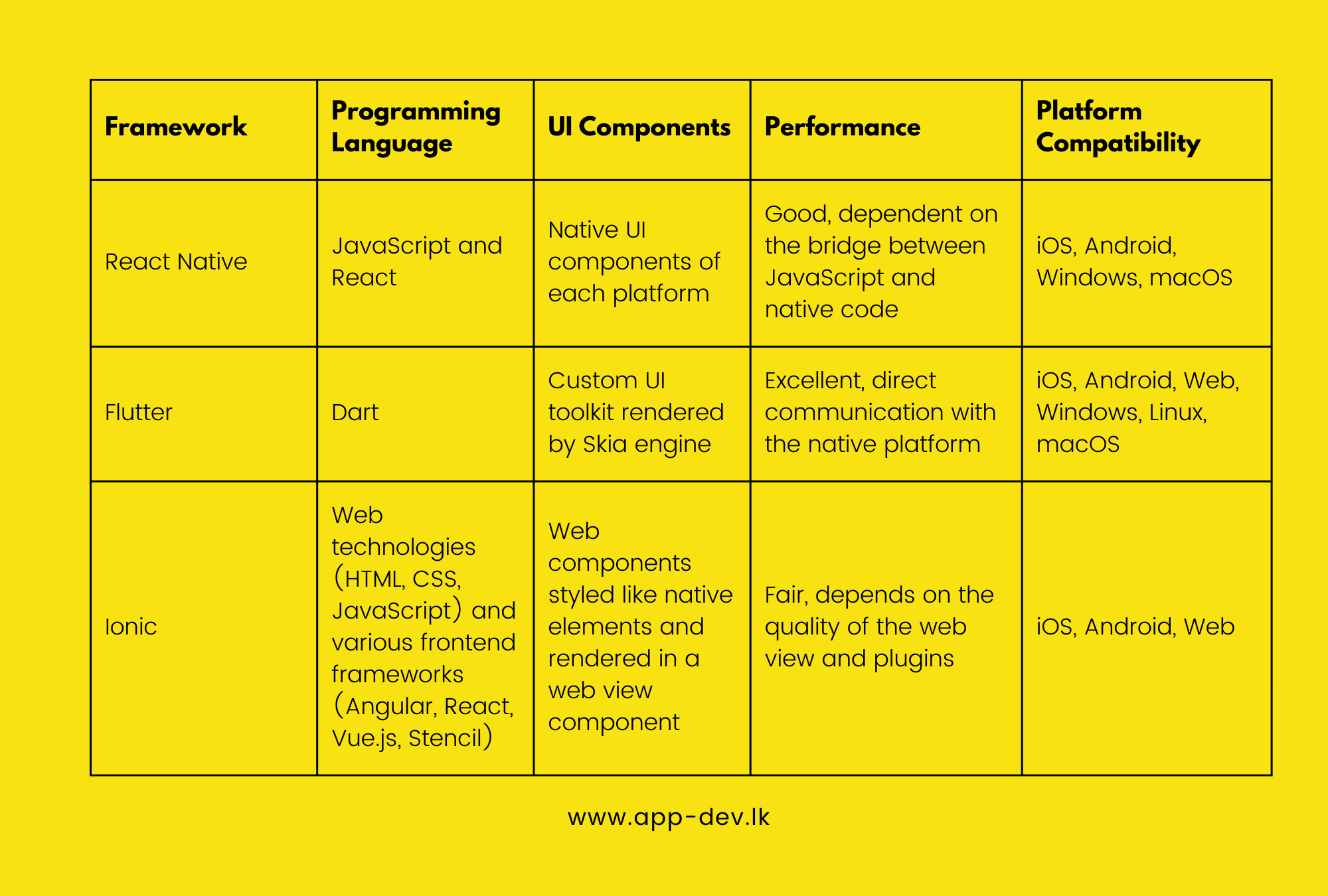
React Native gains an edge due to:
- Use of widely adopted JavaScript and React, making it easier for web developers to learn and adopt for cross-platform app development.
- Utilization of native UI components for each platform, ensuring a native-like look and feel with access to native features through third-party libraries.
- A large and active community of developers providing resources and support for React Native developers.
Are There Any Drawbacks to Using React Native?
While React Native offers numerous advantages, it is essential to acknowledge its limitations:
Architecture and dependency compatibility
Older articles often describe the legacy JavaScript bridge as an unavoidable limitation. That is no longer an accurate description of current releases: React Native 0.82 made the New Architecture mandatory. Existing apps must check native-library compatibility during upgrades. Removing the legacy bridge does not eliminate expensive JavaScript work, unnecessary rendering or slow network requests.
React Native’s performance guide distinguishes work on the JavaScript thread from the native UI thread and recommends measuring release builds. For your app, test representative journeys such as opening a large catalogue, completing a form or returning from a payment flow, then profile the slow part before changing frameworks.
Consistency Across Platforms
- Maintaining consistency across different platforms requires effort, as it depends on the native UI components of each platform. Thorough testing and debugging are necessary to ensure compatibility and quality.
Custom Solutions for Specific Requirements
- Some business-specific requirements may necessitate custom solutions. Collaborating with a bespoke software development company can provide tailor-made solutions to support unique business needs, eliminating operational hiccups and enhancing productivity.
The Bottom Line
Start with a small technical prototype of the riskiest workflow. Check the payment or device SDKs you need, accessibility, offline behaviour, older target devices and the effort of maintaining two store releases. A framework decision should follow those findings, not an unverified list of brands said to use it.
Document what can be shared and what needs platform-specific work in a product requirements brief. Compare release priorities with the Android-versus-iOS planning guide, and include the app-store launch checklist in the delivery estimate. Our mobile app development service covers both native and cross-platform project discussions.
Related articles



About the author
Joel Jerushan writes about mobile apps, websites, AI, SEO, and practical technology choices for growing businesses.
Learn more about App Dev Sri Lanka