
UK News Website Case Study: Aruvi News for the Sri Lankan Community
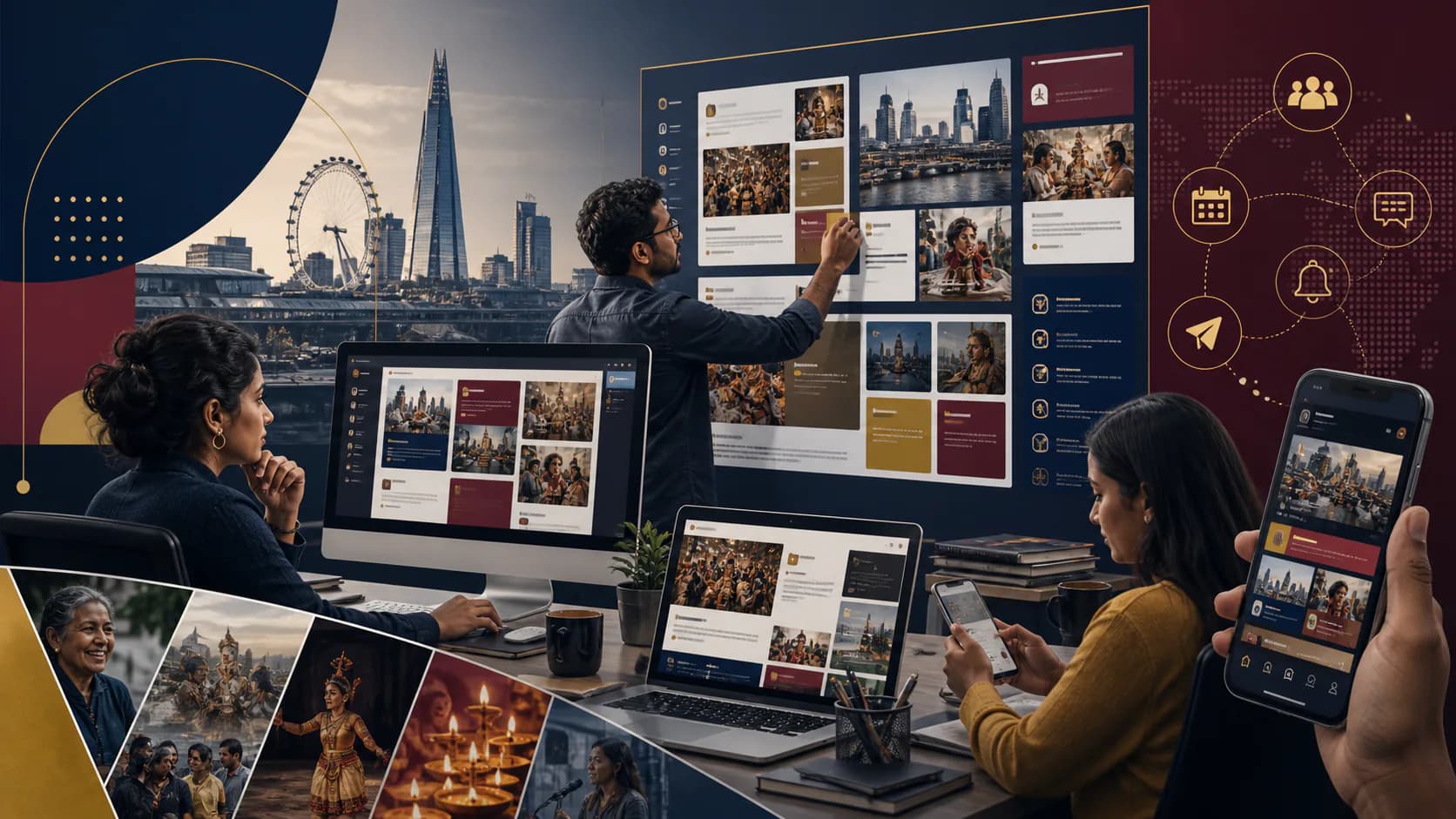
A news website has to work for two groups at the same time. Readers need a clear route to current stories and recurring topics, while editors need a dependable way to publish frequent updates, community notices and commercial content. Aruvi News brought those requirements together for a London-based publication serving the Sri Lankan diaspora.
This case study describes the delivered scope recorded in our Aruvi News portfolio project. It does not claim traffic, revenue or ranking improvements for which no verified measurement has been supplied. The purpose is to explain the product and publishing decisions behind the platform.
Project context
Aruvi News was planned as a digital news destination connecting Sri Lankan readers in London with local, Sri Lankan and international coverage. The publishing scope included breaking stories, community notices, obituaries, events, advertising and ongoing reader engagement.
That mix creates a more complex information architecture than a small company website. A current news story, an event and an obituary have different lifecycles and reader expectations. Advertising must be visible without making editorial content hard to read. Editors also require speed and consistency because the value of timely coverage falls when publishing is difficult.
The project therefore needed:
- a familiar content-management workflow;
- clear categories and tags for different coverage areas;
- reusable article and section layouts;
- a responsive experience across phones and larger screens;
- author, comment, newsletter and social-sharing functions;
- multilingual content support;
- planned advertising positions;
- community-specific sections such as events and obituaries;
- a visual identity that could remain consistent across the site.
Why WordPress and Elementor fit the editorial workflow
The platform was delivered with WordPress and Elementor. For this project, the combination provided an established content-management environment and reusable visual layouts that editors could work with after launch.
Technology selection should follow the operating model. A publication that updates frequently needs editors to create, revise, categorise, schedule and manage content without waiting for a developer for every routine change. A reusable page system also reduces the chance that each story develops a different layout.
The trade-off is continuing maintenance. WordPress core, themes, plugins, accounts and hosting must be monitored and updated. Administrator permissions should match job responsibilities, and unnecessary extensions should be removed. These responsibilities are part of the product, not optional work after delivery. Our website security checklist covers access, backups, dependencies and incident planning.
Structuring news for readers and search engines
News categories need to reflect what readers recognise, not an internal organisation chart. The delivered feature set included categorisation and tagging so stories could be grouped by subject and recurring coverage area. Consistent article templates support a recognisable headline, publishing details, content body, sharing tools and related navigation.
This structure also gives search engines clearer signals than a collection of isolated pages. Each article needs a unique title and description, one main heading, descriptive links, suitable image alternative text and a stable URL. Category pages should help users explore a topic rather than exist as thin archives with little context.
Search performance still depends on original reporting, accuracy, editorial authority, technical health and sustained publishing. A template cannot manufacture trust. It can, however, stop routine technical inconsistencies from weakening useful journalism.
Serving local and diaspora information needs
Diaspora publications often connect several geographic contexts. A reader may follow news from Sri Lanka, events in London and community announcements in the same visit. Navigation and labelling must make that relationship understandable without assuming every reader has the same language preference or familiarity with the site.
The Aruvi News delivery included multilingual content support and sections for events and obituaries alongside general news. Multilingual planning involves more than translating menus. Teams must decide whether each story exists in one or several languages, who owns translation, how alternate versions relate and what happens when only one version receives an update. The multilingual website planning guide explains those governance questions.
Community engagement without fragmenting the experience
The planned feature set included comments, newsletters, social sharing and breaking-news alerts. Each channel can bring a reader back, but each also creates operational work.
Comments require moderation rules, spam controls and an escalation route. Newsletters require permission-aware subscription management, dependable sending and an editorial schedule. Alerts must be reserved for genuinely timely updates or readers will disable them. Social sharing should preserve the article's canonical URL and present an accurate preview image and description.
Treat these as connected parts of the editorial journey. The website remains the durable source; notifications and social posts guide people to it. Publishing the complete story only on a third-party platform weakens the publication's control over its archive and audience relationship.
Designing advertising into the system
Advertising was part of the platform requirements. It is easier to create a usable commercial model when placements are designed with the page system instead of inserted unpredictably after launch.
Define allowed formats, responsive behaviour, frequency and editorial separation. Reserve space to reduce layout shifts and test how placements affect mobile reading. Avoid covering navigation or the main content. Track ad performance, but also watch reader engagement and page performance so short-term inventory decisions do not damage the publication's main product.
The same principle applies to sponsorship and branded content: presentation and labelling should make the commercial relationship clear to readers. Editorial credibility is harder to rebuild than a page layout.
Mobile performance for a news audience
News readers frequently arrive through search, social or messaging links on a phone. The delivered platform included mobile-responsive design, so page structure, navigation and media needed to adapt across viewports.
Responsiveness alone does not guarantee speed. Large images, scripts, advertising tags, font files and third-party widgets can delay the main story and cause visible movement. Image dimensions, modern formats, caching, script loading and layout reservation should be checked continuously as the site changes. The Core Web Vitals guide explains how to connect user-facing symptoms to practical measurements.
Editors influence performance too. Upload guidance, image templates and preview checks help prevent oversized media or inconsistent crops from accumulating in the archive.
Author identity and publishing accountability
Author-profile management was included in the delivered feature set. Clear bylines and profiles help readers understand who created a story and give the publication a consistent place for relevant author information.
The CMS should also preserve revisions, publication status and permission boundaries. Draft, review, publish and update responsibilities need to be clear. Corrections should be handled consistently. For sensitive community notices, define who verifies the information and who may approve publication.
These practices are editorial decisions supported by technology. They cannot be solved by adding an author box alone.
What the delivered platform provides
The completed delivery provides the editorial team with a structured WordPress platform for local, Sri Lankan and international stories, community information and commercial content. Readers can move between timely articles and recurring sections using responsive navigation and consistent templates.
The recorded feature scope includes:
- WordPress content management and Elementor layouts;
- news categories and tags;
- advertising management and placement;
- obituary and community-event sections;
- social sharing and comments;
- custom logo and branding work;
- multilingual content support;
- newsletter subscriptions and breaking-news alerts;
- SEO-aware article structure;
- mobile-responsive presentation;
- author-profile management.
These are delivered capabilities, not claims of a particular audience or commercial outcome. Reliable outcome reporting would require agreed analytics, a baseline, a measurement period and access to business data.
Lessons for another UK publication
The most reusable lesson is to design the publishing operation before selecting every feature. Define content types, section ownership, review steps, moderation, advertising rules, image standards and update responsibility. Then choose technology that makes those routines easier.
For a publication serving several communities or countries, add language and location governance early. For an advertising-supported product, budget for performance monitoring and consent-aware measurement. For a frequent publishing schedule, make security updates, backups and editor support part of ongoing operations.
App Dev Sri Lanka supports overseas projects through its UK software development company page while retaining the implementation experience described across our website development services. To discuss a news, membership or community platform, share the intended audience, publishing roles and required integrations through Get Started.
Related articles


About the author
Joel Jerushan writes about mobile apps, websites, AI, SEO, and practical technology choices for growing businesses.
Learn more about App Dev Sri Lanka