AI Sinhala and Tamil Translation for Workplace Messages
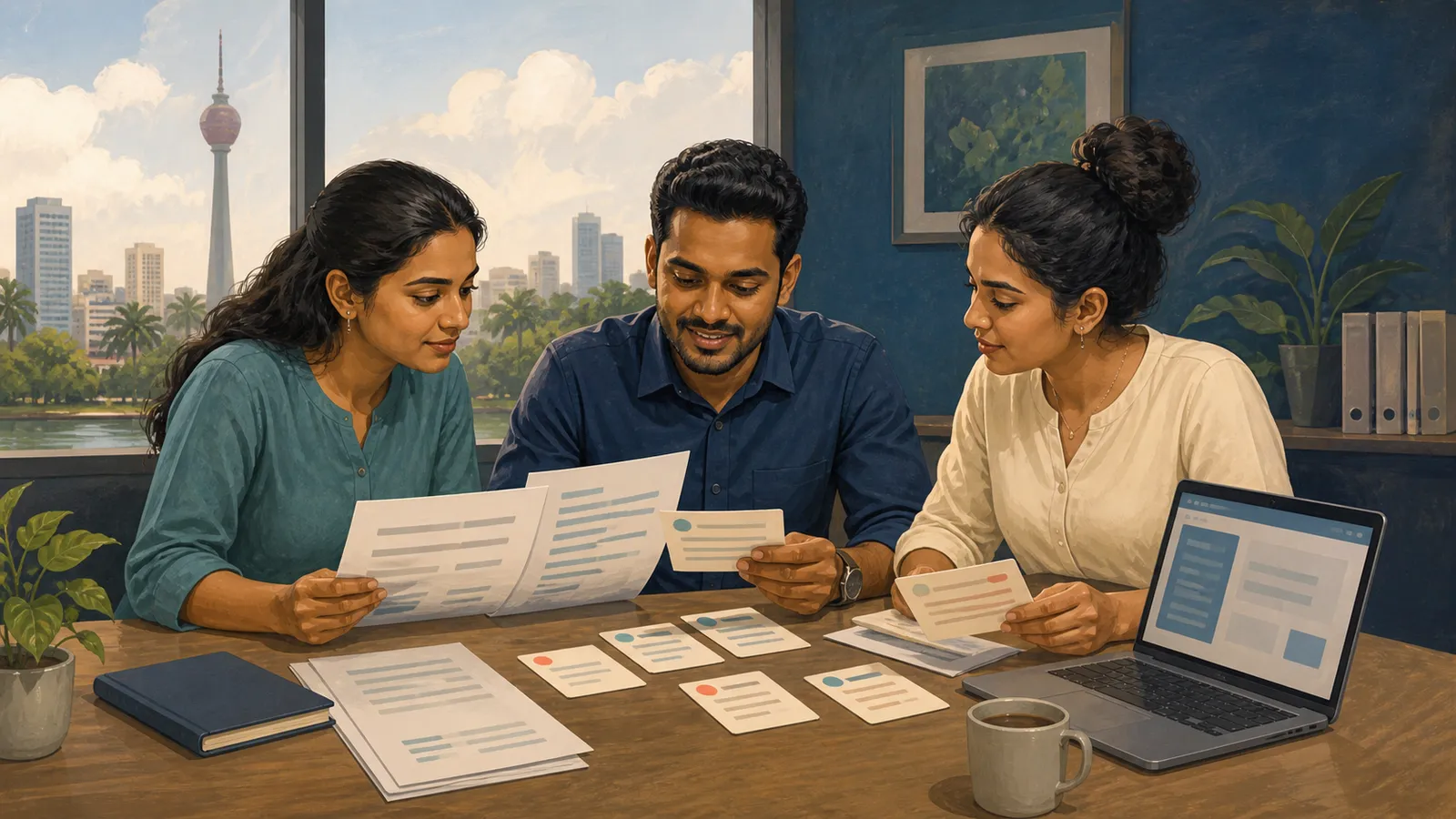
AI-assisted Sinhala and Tamil translation can help create a first draft of a workplace message, but the final text needs someone who understands the language and context. Names, dates, tone and instructions can be wrong even when a translation looks fluent.
For Sri Lankan teams, begin with a clear source message and decide who will review each language version.
Simplify the source text first
Remove vague references such as “send it soon” and identify the document, recipient and deadline. Short sentences are easier to translate and review.
Avoid idioms when the message contains an important instruction. A phrase that sounds friendly in English may become confusing or overly formal in another language.
Write the intended audience and tone in the brief. A customer notice, internal reminder and interview invitation should not all sound the same.
Define what must remain exact
| Detail | Review question |
|---|---|
| Names | Is the person or organisation identified correctly? |
| Dates and times | Are the value and time zone unchanged? |
| Numbers | Are amounts, quantities and references accurate? |
| Instruction | Does the reader know what to do? |
| Negation | Is “not required” still clearly negative? |
| Tone | Is the message appropriate for the relationship? |
Keep product names and document references consistent across versions. If transliteration is required, establish the preferred spelling.
Use a bounded prompt
An original prompt could be: “Draft a polite Sinhala version of this internal meeting reminder. Preserve all names, dates and times exactly. Use plain workplace language. Flag any phrase whose meaning is ambiguous instead of guessing.”
Ask separately for the Tamil version with the same constraints. Do not assume that a good result in one language establishes quality in the other.
Use approved tools for the information involved. A short public notice and a confidential employee message have different data requirements.
Review meaning with a bilingual reader
Ask the reviewer to explain what action the translated message requests, then compare that explanation with the source.
A back-translation can reveal some differences, but it is not a substitute for a competent human review. Two automated translations may repeat or conceal the same error.
For document workflows, Google Translate's document guidance explains supported formats and limitations, including that text in scanned image pages may remain untranslated. Inspect the actual output rather than assuming every part was processed.
Check the final layout
Longer text may wrap differently in a button, email subject or mobile screen. Review the real publishing format, including fonts and line breaks.
Keep each language version aligned with the same source revision. If the meeting time changes, update all versions and record which one was approved.
For legal, medical, safety-critical or other high-stakes communication, use appropriately qualified review rather than relying on an informal AI draft.
Can you publish a translation without speaking the language?
Arrange a competent review first. Visual fluency does not establish that the meaning is correct.
Should every word be translated?
Some names, codes and product terms may need to remain unchanged. Decide this in the brief and apply it consistently.
Is back-translation enough?
It is one check, but it can miss tone, context and repeated machine errors. Human review remains important.
What if the source text is ambiguous?
Clarify the original message before translating. Otherwise each language may express a different interpretation.
What is a useful approval record?
Keep the source version, translated version, review date and reviewer confirmation so later edits can be applied consistently.
Related guides
- AI Email Prompts for Work: Sri Lanka Examples
- AI Meeting Notes: A Reliable Workflow for Sri Lankan Teams
- How to Fact-Check AI Answers for Work in Sri Lanka
Browse the Sri Lanka work and technology guides for more practical application, AI and workplace projects.
Related articles


About the author
App Dev Sri Lanka prepared this guide with AI assistance, original examples and the linked primary sources. The collection was informed by Google Trends research for Sri Lanka on 2 September 2026. Illustrations depict fictional people. Examples are educational; this article is not a live vacancy notice or an employer endorsement.
Learn more about App Dev Sri Lanka